What Is XUCVIHKDS? Meaning, Model Number, Uses, and Importance Explained

In the past year, I’ve noticed a strange term popping up in forums, tech blogs, and even casual conversations between developers and analysts: XUCVIHKDS. At first glance, it looks like one of those random strings nobody remembers five minutes later. But once you slow down and look at how people talk about it, something interesting happens. The term keeps showing up in places where clarity, identification, and structure matter. That alone makes it worth understanding, especially if you like knowing why certain concepts suddenly gain attention.
This article isn’t about hype or speculation. It’s about unpacking what this term represents, how people actually use it, and why it has quietly become relevant across different industries.
Understanding the Meaning Behind the Term
Let’s start with the obvious question: what does it actually mean?
In most real-world discussions, XUCVIHKDS is treated as an identifier rather than a word with emotional or cultural meaning. Think of it the way you think about serial numbers or internal model codes. They aren’t meant to sound friendly. They exist to organize systems that would otherwise be messy.
What stands out here is how flexible the term is. Some people use it when referring to technology products. Others mention it in data modeling or internal classification systems. That tells us something important: the meaning is contextual. It adapts based on where it’s used, rather than being locked into one narrow definition.
Why Model Numbers Like This Exist at All
Model numbers don’t get enough credit. Most users ignore them completely, but behind the scenes, they’re essential.
When companies or systems scale, human-friendly names stop working. Imagine trying to manage hundreds of product versions using casual labels. It would fall apart quickly. That’s where identifiers like XUCVIHKDS come in. They allow teams to reference a specific configuration without confusion.
From experience, you often only notice these codes when something goes wrong. A support ticket. A system mismatch. A compatibility issue. Suddenly, that strange string becomes the most important detail in the room.
How XUCVIHKDS Is Used in Practical Scenarios
Technology and Software Environments
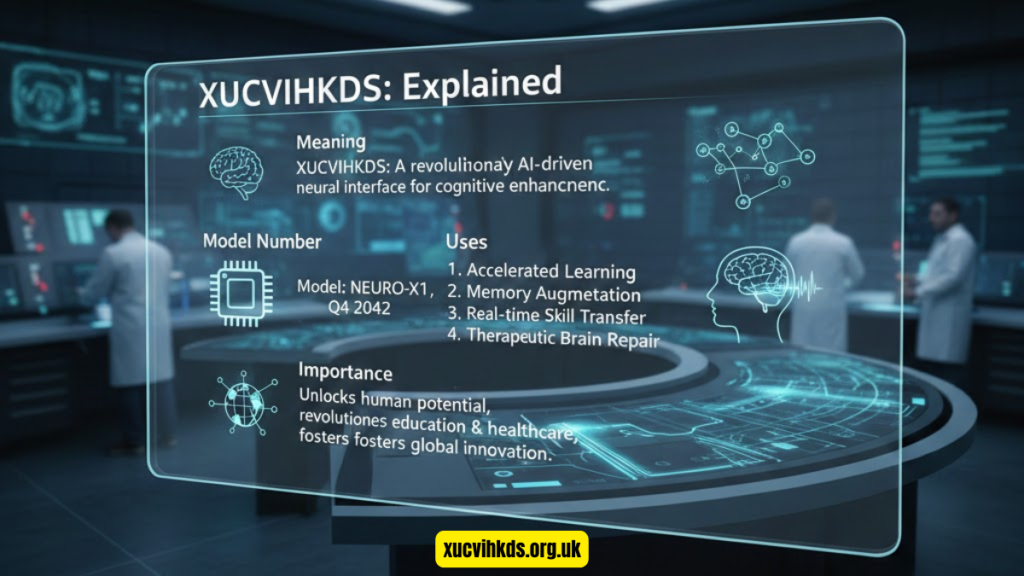
In tech-heavy environments, identifiers help track versions, dependencies, and compatibility layers. A code like this might represent a framework variation, an internal build, or a system profile. It’s not designed for marketing. It’s designed for precision.
Developers I’ve spoken to don’t romanticize these terms. They use them because they work. When you need to isolate an issue fast, clarity beats creativity every time.
Data Systems and Classification
Beyond software, similar identifiers appear in analytics and data systems. They label datasets, define processing rules, or distinguish one operational flow from another. In these spaces, ambiguity is dangerous.
If you mislabel something, downstream decisions suffer. That’s why neutral, structured codes remain popular despite looking unfriendly to outsiders.
The Quiet Importance of Consistency
One reason XUCVIHKDS keeps showing up is consistency. Systems depend on it. Humans may tolerate inconsistency, but machines do not.
When a code is used consistently across documentation, tools, and teams, it becomes reliable. That reliability saves time, reduces errors, and builds trust within organizations. You don’t need to love the name. You just need to trust what it represents.
From a practical standpoint, this is why people resist renaming or simplifying these identifiers. Once embedded, they become part of the system’s memory.
Common Misunderstandings Around XUCVIHKDS
“It Must Be a Product Name”
This is one of the most common assumptions. Because it looks official, many assume it’s a branded product or commercial model. In reality, it’s often internal, functional, or contextual.
“It Has a Universal Definition”
Another mistake is expecting a single, global meaning. The same identifier structure can represent different things in different environments. Context always matters more than the letters themselves.
If you approach it expecting a dictionary-style definition, frustration usually follows.
Why People Suddenly Care About It
Trends don’t always start loudly. Sometimes a term gains attention simply because more people encounter it at the same time.
Remote work, distributed systems, and shared tools have increased exposure to internal identifiers. Now, non-technical users see things they were never meant to interact with. That visibility sparks curiosity.
When something keeps appearing without explanation, people naturally ask questions. That’s how discussions around XUCVIHKDS began to spread.
Is This Something You Actually Need to Know?
That depends on your role and interests.
If you work with systems, documentation, or technical workflows, understanding identifiers like this can make life easier. It helps when reading reports, communicating issues, or avoiding misunderstandings.
If you’re a casual reader, the value is more about awareness. Knowing what these codes represent prevents unnecessary confusion. Instead of feeling lost, you recognize that it’s simply a structured reference doing its job.
How to Think About It Going Forward
Rather than focusing on the letters themselves, focus on the function. XUCVIHKDS is a reminder that not everything in modern systems is built for storytelling. Some things exist purely for order.
Once you accept that, the term becomes less intimidating. It’s just a tool. A quiet one, but an important one.
Frequently Asked Questions
1. Is XUCVIHKDS a real product or just a concept?
It’s best understood as an identifier used within specific systems rather than a consumer-facing product.
2. Can the meaning change depending on where it’s used?
Yes. Context determines what it represents in each environment.
3. Why don’t companies use simpler names instead?
Simple names don’t scale well. Structured codes reduce ambiguity and errors.
4. Should non-technical users worry about understanding it?
Not deeply, but basic awareness can help avoid confusion when encountering it.
5. Is XUCVIHKDS likely to remain relevant?
As long as complex systems exist, structured identifiers like this will continue to matter.